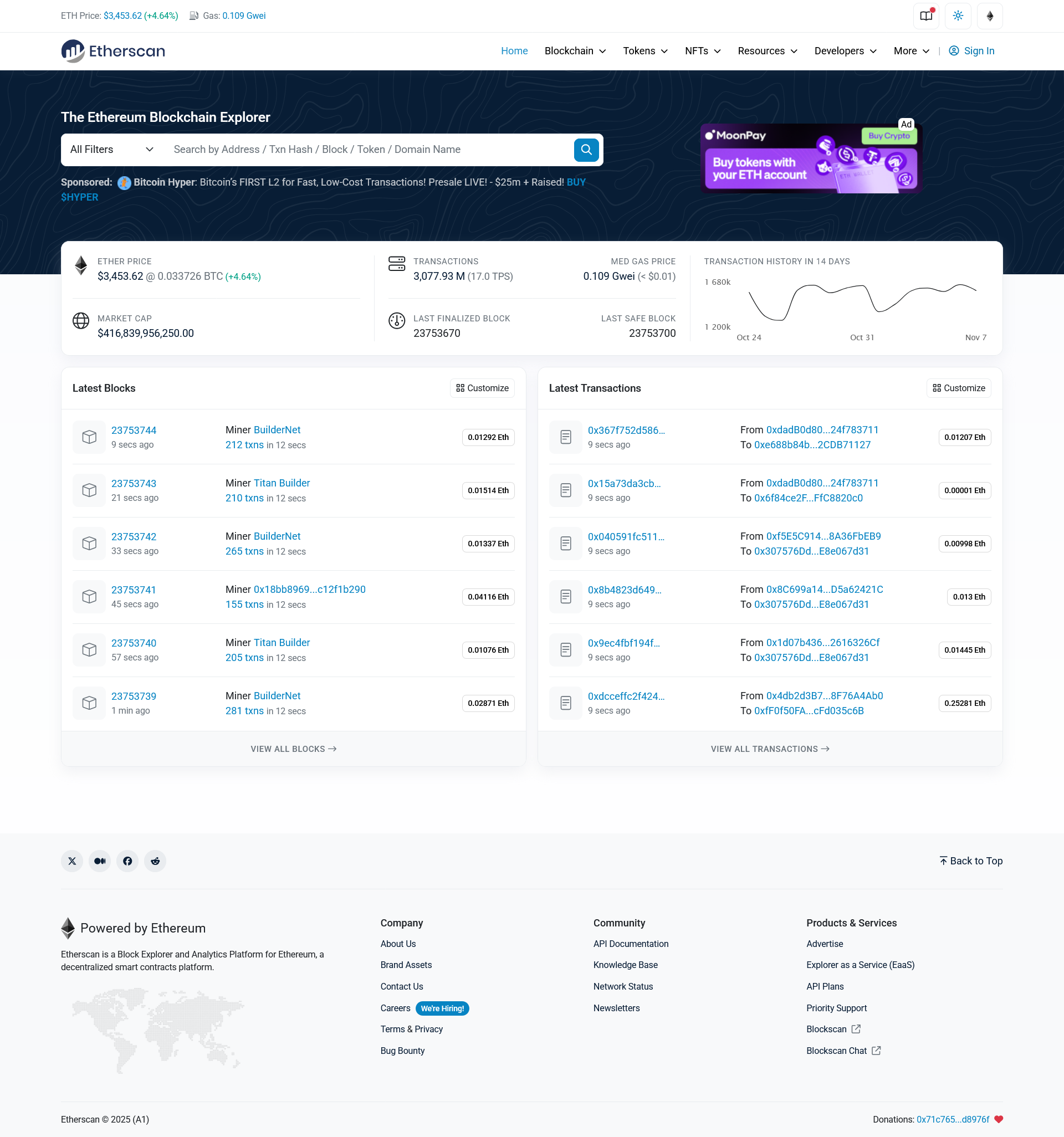
In the world of blockchain, transparency is both a defining feature and a challenge. Raw blockchain data is public, but without the right tools, it can be difficult to interpret. That’s where Etherscan comes in—a widely used blockchain explorer that makes Ethereum data accessible, searchable, and understandable.
What Is Etherscan ?
Etherscan is a block explorer and analytics platform designed for the Ethereum network. It allows users to view transactions, wallet addresses, smart contracts, token activity, and other on-chain data in real time. Think of it as a search engine for the Ethereum blockchain: instead of web pages, it indexes blocks, transactions, and addresses.
Launched in 2015, Etherscan has become one of the most trusted tools in the crypto ecosystem, used by developers, traders, and everyday users alike.
Key Features
1. Transaction Tracking :-
Users can enter a transaction hash to see its status, confirmations, fees, sender and receiver addresses, and timestamps. This is especially useful for verifying whether a transfer has been completed.
2. Wallet Address Lookup :-
By searching a wallet address, users can view its entire transaction history, token balances, NFTs, and interactions with decentralized applications (dApps).
3. Smart Contract Insights :-
Etherscan provides access to verified smart contract code. Developers can analyze how contracts work, and users can interact with them directly through the platform.
4. Token Information :-
It supports ERC-20, ERC-721, and other token standards, offering detailed data on token supply, holders, and transfers.
5. Gas Tracker :-
Etherscan includes a gas tracker that shows current transaction fees on the Ethereum network, helping users decide when to transact more cost-effectively.
Why Etherscan Matters
Blockchain networks like Ethereum are decentralized, meaning there’s no central authority managing records. Etherscan plays a crucial role by organizing this decentralized data into a user-friendly interface. It enhances transparency while reducing complexity.
For example:
. Traders use it to confirm transactions.
. Developers use it to debug smart contracts.
. Security researchers use it to investigate suspicious activity.
Limitations
Despite its usefulness, Etherscan has some limitations:
. It does not store private keys or control funds—it only displays data.
. It may be overwhelming for beginners due to the technical detail.
. It only covers Ethereum and Ethereum-compatible networks (though similar explorers exist for other blockchains).
Etherscan and the Broader Ecosystem
Etherscan is part of a broader category of blockchain explorers. Comparable tools exist for other networks, but Etherscan remains a benchmark due to its reliability and feature set. It has also expanded with APIs and developer tools, making it integral to many blockchain-based applications.
Conclusion
Etherscan exemplifies how powerful tools can bridge the gap between complex blockchain data and everyday usability. Whether you're tracking a transaction, exploring NFTs, or auditing smart contracts, it serves as a critical interface between users and the Ethereum network.

HTML Builder